



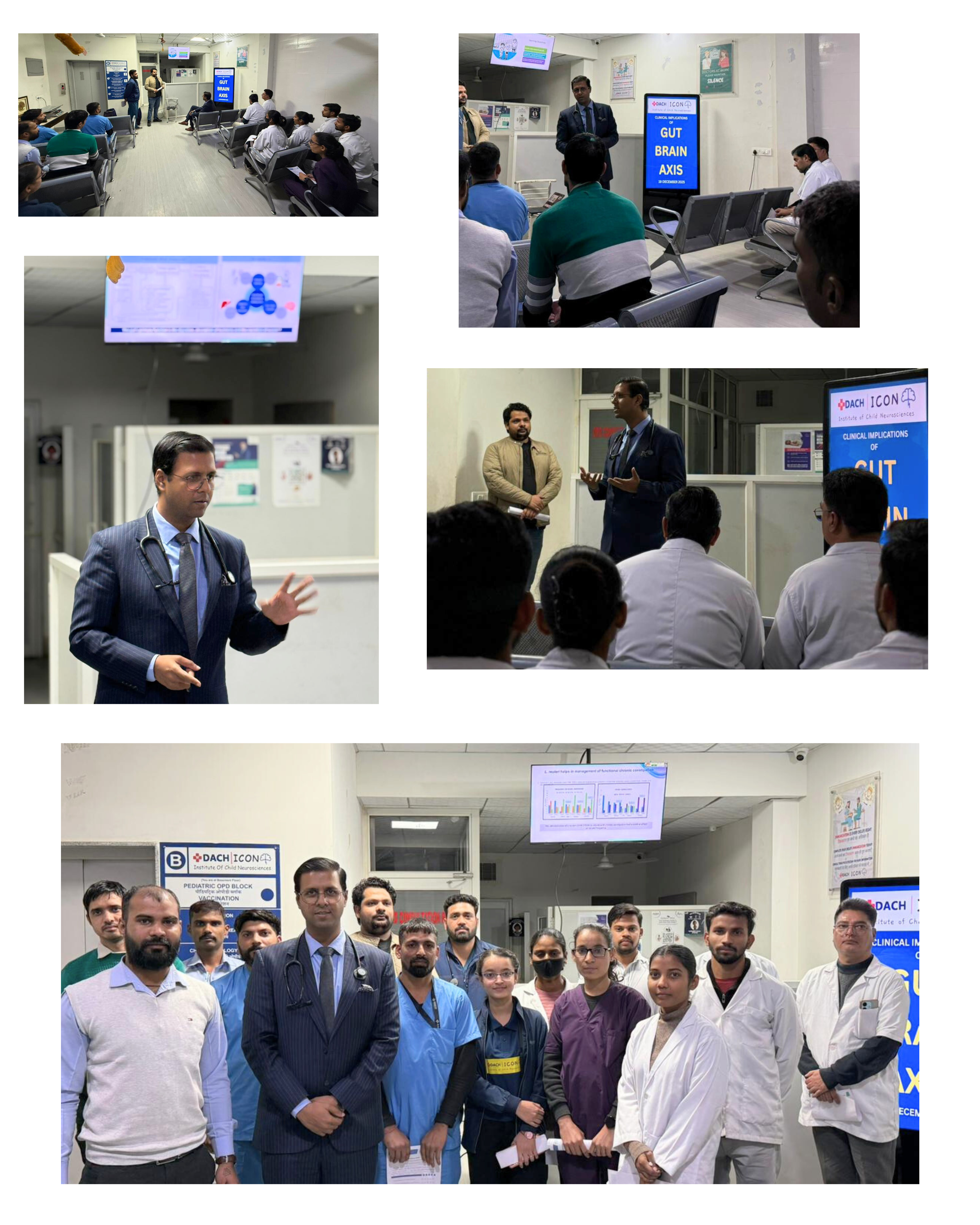
ActivityTitle:
Clinical relevance of Gut–Brain Axis in Pediatric Practice
Date: 31 January 2026
TimeDuration:
11:00 AM to 2:00 PM
ChiefOrganizer:
ICON Foundation
Objectives:
· To increase awareness about the relationshipbetween the digestive system and the brain through the concept of the Gut–BrainAxis and explain the connection between gut health, and neurologicalconditions.
BriefOverview:
This activity was organized by ICON Foundation on the topicof the Gut–Brain Axis. The objective of the program was to explain theinterconnection between the digestive system and the brain in a simple andscientific manner. During the session, expert speakers highlighted how guthealth influences mental well-being, behavior, and neurological development.The topic was explained through practical examples, interactive discussions,and a question–answer session. Participants were also guided on the importanceof diet, lifestyle, and mental balance for maintaining overall health.
Attended By: NursingStaff , Resident Doctors, Allied medical staff
Speakers:
Dr. Varnit Shanker, Dr. Zeeshan, Dr. Sushil
(fromthe department of Pediatric Neurology, DACH)
Detailsof the Event:
The event commenced with a formal introduction to the topicGut–Brain Axis, highlighting its growing importance in modern healthcare. Thespeakers explained the concept of the gut–brain connection and described howthe digestive system and the brain communicate through nerves, hormones, andthe immune system. Special emphasis was given to the role of gut microbiota inmental health, behavior, and neurological development.
The speakers also discussed how poor gut health cancontribute to stress, anxiety, depression, and certain neurological conditions.Practical guidance was provided on maintaining gut health through a balanceddiet, probiotics, proper sleep, and stress management. Real-life clinicalexamples were shared to help participants understand the relevance of theGut–Brain Axis in patient care.
An interactive question-and-answer session was conducted,where participants actively engaged and clarified their doubts. The sessionconcluded with the collection of feedback forms to evaluate the effectivenessof the program.
Outcome:
· Participants improved awareness and scientificunderstanding of the Gut–Brain Axis.
· Healthcare staff were motivated to adopt aholistic approach in patient care and management.